Top 10 Rattan Back Sofa Types for Global Buyers

Time:2026-10-03 Author:Madeline
0%

Rattan Back Sofa designs are gaining attention among global buyers seeking warmth, airflow, and natural texture. They suit coastal villas, boutique hotels, compact apartments, and relaxed outdoor lounges. Yet appearance alone cannot guarantee value. A beautiful sofa may still fail when its frame, weaving, or cushioning cannot handle daily use.

Ayush Kasliwal, an Indian designer known for working with natural materials, offers a useful design principle: “Materials have a memory, and design should respect that memory.” This idea matters when comparing Rattan Back Sofa styles. Buyers should examine the rattan grade, frame construction, weave tightness, seat depth, cushion density, and protective finish. A curved-back model may create a softer silhouette, while a high-back design can provide stronger support during extended seating. Barrel, wingback, armless, modular, and lounge formats each serve different rooms and purchasing goals.

Small details reveal manufacturing discipline. Look for evenly spaced strands, smooth joins, stable legs, and cushions that recover after pressure. Ask whether the rattan is intended for indoor or covered outdoor use. Humidity, sunlight, shipping distance, and assembly requirements can change the buying decision. Certification and material documentation also deserve attention, especially for commercial projects.

Not every attractive option is practical. Some woven backs feel firm. Others may loosen over time. This guide compares ten Rattan Back Sofa types through design, comfort, durability, maintenance, and market suitability. The ranking is useful, but not absolute. A sofa that works beautifully in Singapore may feel unsuitable in a dry European showroom. Good selection requires evidence, careful questions, and a willingness to reconsider first impressions.
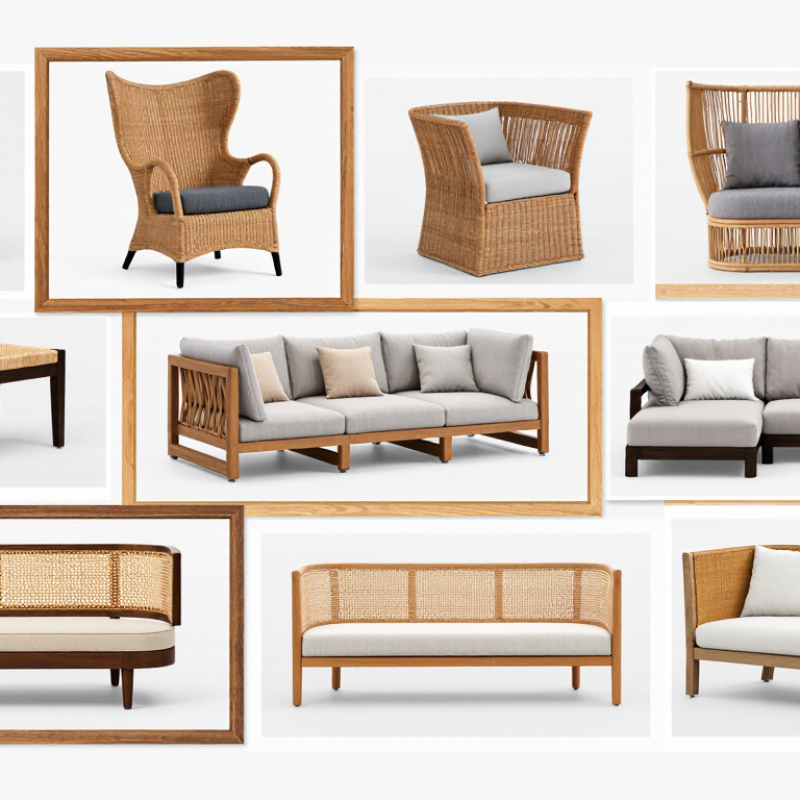
Top 10 Rattan Back Sofa Types for Global Buyers

Rattan-Back Sofa Taxonomy: 10 Types by Frame, Weave, and Silhouette

Top 10 Rattan Back Sofa Types for Global Buyers

Rattan-Back Sofa Taxonomy: 10 Types by Frame, Weave, and Silhouette

A useful taxonomy examines frame material, weaving method, and overall silhouette. These details affect comfort, durability, shipping weight, and maintenance.

The first type is the solid-wood Lawson sofa with open cane panels.

Second is the metal-frame tub sofa with tight cane webbing.

Third is the engineered-wood modular sofa with pressed rattan sheets.

Fourth is the timber sectional with basket weave.

Fifth is the aluminum-frame outdoor sofa with synthetic wicker.

Sixth is the bentwood barrel sofa with a rounded back.

Seventh is the low platform sofa with horizontal slat weaving.

Eighth is the armless rattan daybed with loose cushions.

Ninth is the high-back wing sofa with dense woven panels.

Tenth is the sculptural sofa with scalloped or curved silhouettes.

Grand View Research’s 2024 outdoor furniture analysis projects more than 5% annual market growth through 2030. That supports demand for lightweight, visually natural seating. However, growth does not guarantee quality. The same report highlights durability and weather resistance as important purchasing factors.

FAO’s Global Forest Resources Assessment 2020 records 4.06 billion hectares of forest worldwide, but this figure does not prove responsible rattan sourcing. Buyers should verify frame joints, weave tension, moisture treatment, cushion density, and documented material origins.

A beautiful back can still hide weak construction. That deserves more scrutiny.

Material Data: PE Rattan, Natural Rattan, Aluminum, and Teak Frames

Top 10 Rattan Back Sofa Types for Global Buyers

Material Data: PE Rattan, Natural Rattan, Aluminum, and Teak Frames

Global buyers can choose from ten practical rattan back sofa styles: armless loveseats, deep-seat sofas, curved sofas, modular sectionals, corner sofas, daybeds, high-back sofas, balcony sofas, conversation sets, and dining-height benches. Each style changes comfort, shipping volume, and placement needs. Deep seats suit relaxed outdoor lounges, while compact balcony models save valuable floor space. Modular designs offer easier replacement, but their connectors require careful inspection.

PE rattan is synthetic, moisture-resistant, and consistent in color. It performs well beside pools and in humid climates. Natural rattan feels warmer and shows beautiful irregular fibers. However, it needs covered placement and regular sealing.

Aluminum frames are lightweight, rust-resistant, and practical for frequent relocation. Powder coating improves surface protection, but scratches still need prompt repair. Teak frames provide strength, weight, and a rich grain. They weather gradually, sometimes unevenly.

No material wins everywhere. That is the part buyers often overlook.

Tips: Request samples, frame-wall thickness, weaving density, cushion fabric data, and test reports. Check drainage holes under cushions. Ask how replacement parts are packed. A sofa may look excellent online, yet feel too low or firm in real use. Measure doorways, elevators, and patio corners before ordering. Also compare total landed cost, not only the factory price.

Top 10 Types Compared by Seat Height, Load Rating, and Footprint

Rattan-back sofas vary sharply in seat height, load rating, and floor demand. A dining-height model usually sits 45–50 cm above the floor, with a compact 120–160 cm footprint. A lounge sofa drops to 38–43 cm and often needs 180–220 cm of wall space. Loveseats save room, but their 120–150 kg total load rating may limit heavier daily use. Check whether the rating covers the whole sofa or each seat.

Modular sectionals offer flexible footprints, commonly 240–320 cm wide, with a practical target of 120–150 kg per seat. Daybeds need deeper floors, often 90–110 cm, and should support at least 180 kg when used for reclining. Balcony sofas are narrower, usually below 140 cm, but their higher 45–48 cm seat height can improve standing comfort. High-back designs provide better shoulder support, although their taller frames may feel visually heavy in small rooms.

Grand View Research’s 2024 furniture-market analysis values the global furniture sector at hundreds of billions of dollars, reflecting intense demand for adaptable residential seating. Mordor Intelligence’s 2024 outdoor-furniture analysis also identifies space efficiency and weather-resistant construction as major purchasing factors. These reports describe market direction, not product safety. Buyers should request test evidence against recognized seating standards, such as BIFMA performance methods, and confirm moisture-resistant materials. A tidy comparison can still mislead. Cushion compression, joint construction, and uneven flooring may reduce real-world capacity. Seat height is only useful when measured from the finished floor to the compressed cushion.

Global Compliance Benchmarks: EN 12520, ISO 7170, and UV Testing

Top 10 Rattan Back Sofa Types for Global Buyers

For global buyers, a rattan back sofa is more than a visual choice. Curved, armless, modular, lounge, and compact balcony styles must perform under daily use. EN 12520 is a key benchmark for domestic seating. It examines strength, durability, and safety through defined testing procedures. Ask for the exact edition, test category, and laboratory report. A sofa with loose weaving may look attractive, yet poor frame joints can fail during repeated loading. I have seen samples pass visual inspection but reveal movement after endurance testing. That gap deserves attention.

ISO 7170 mainly concerns storage units, not ordinary sofas. However, it becomes relevant when a rattan sofa includes drawers, cabinets, or hidden compartments. Buyers should confirm that the report covers the complete configuration, including hardware and storage loads. UV testing also needs careful review. Natural rattan can fade, dry, or crack under strong sunlight, while synthetic rattan may soften or discolor. Test the actual surface, coating, and color, not only a separate plastic strip. Exposure duration, light source, temperature, and acceptance criteria should appear in the report. Results can vary between laboratories.

Tips: Request pre-production samples and photograph every test label. Check frame moisture, fastener corrosion, edge finishing, and weave tension. Do not treat “UV resistant” as a complete claim. It is not. For outdoor placement, repeat inspections after shipping simulations and several exposure cycles. Some decisions may still be imperfect, but documented assumptions are safer than attractive promises.

Top 10 Rattan-Back Sofa Types for Global Buyers

Global compliance benchmark applicability: EN 12520, ISO 7170 and UV exposure testing

The chart is a buyer-screening matrix rather than a certification result or market-share ranking. EN 12520 is directly relevant to domestic seating strength, durability and safety. ISO 7170 applies to storage units, so it is relevant only when a sofa includes an integrated storage compartment. UV exposure testing is most relevant to outdoor or sun-exposed designs; the applicable test method and exposure duration should be agreed with the buyer and specified for the intended material and finish.

Buyer Matrix: MOQ, FOB Pricing, Lead Time, and Climate Suitability

Rattan back sofas vary widely in buying value, not just appearance. A practical matrix should compare MOQ, FOB pricing, lead time, and climate suitability. Barrel-back and club sofas usually require 50–100 units, with FOB prices around USD 85–160 per piece. Their compact frames suit apartments and hospitality projects. High-back and wingback designs often start at 30–60 units. Expect USD 120–220 FOB, with stronger comfort and visual presence.

Loveseats and modular sofas may need 20–50 units, depending on upholstery and packaging. Typical FOB pricing ranges from USD 140–280. Modular frames work well for dry or covered outdoor spaces. Sectional and daybed styles commonly need 20–40 units, priced from USD 180–360 FOB. They offer flexibility, but shipping volume can reduce margin. Bentwood, rocking, and armless rattan sofas often begin at 50 units. Their FOB prices can range from USD 90–190.

Lead times usually fall between 35 and 65 days after sample approval. Custom cushions may add 7–15 days. For humid coastal markets, buyers should request treated rattan, sealed joints, quick-dry foam, and breathable fabric. For dry interiors, standard woven panels may perform adequately. Direct rain remains a serious risk. Climate claims need testing, not optimism. These figures are working estimates, and factory capacity changes during peak seasons. A low MOQ may also increase unit cost, which inexperienced buyers sometimes overlook. Samples should be checked for weave tension, frame movement, odor, and carton protection before confirming bulk production.

Top 10 Rattan Back Sofa Types for Global Buyers - Buyer Matrix: MOQ, FOB Pricing, Lead Time, and Climate Suitability

Indicative export-planning benchmarks for standard commercial specifications; actual quotations vary by material grade, dimensions, cushioning, finish, packaging, order volume, and shipping season.
No. Rattan-Back Sofa Type Typical Configuration Indicative MOQ
(Sets)
Indicative FOB Price
(USD / Set)
Typical Lead Time
(Weeks)
Recommended Rattan & Frame Specification Climate Suitability Best-Fit Buyer Segment Key Procurement Consideration
1 Classic 3-Seater Rattan-Back Sofa Three-seat frame with loose seat and back cushions; usually paired with matching lounge chairs. 50 $180–$320 8–12 Natural or synthetic rattan over kiln-dried hardwood or powder-coated steel; removable polyester cushion covers. Dry indoor / covered outdoor Furniture retailers, hospitality projects, living-room collections Confirm seat depth, cushion density, knock-down packaging, and carton drop-test requirements.
2 Compact Loveseat Rattan-Back Sofa Two-seat compact design for apartments, balconies, cafés, and smaller hospitality rooms. 80 $125–$230 7–10 Handwoven PE rattan or paper cord for indoor use; steel or hardwood structure depending on target price. Dry indoor / sheltered balcony Apartment furniture, online retail, cafés, serviced apartments Measure packed volume carefully because compact products are often sold through parcel or e-commerce channels.
3 Modular Sectional Rattan Sofa Two to six modular units that can be arranged as an L-shape, U-shape, or separate seating. 30 $420–$850 10–14 UV-stabilized PE rattan, aluminum frame, quick-dry foam, and solution-dyed outdoor fabric for exterior use. Covered outdoor / humid climates Resorts, villas, outdoor-living retailers, contract furnishing Specify module connectors, replacement cushion availability, water drainage, and maximum allowable moisture exposure.
4 Rattan-Back Sofa with Chaise Two- or three-seat sofa combined with a left- or right-hand chaise section. 40 $330–$650 9–13 PE rattan with aluminum frame for outdoor programs; natural rattan is generally better suited to dry interiors. Covered outdoor / dry indoor Residential developers, villas, premium home retailers Lock the chaise orientation before production and request both left- and right-facing drawings for approval.
5 Barrel-Back Rattan Sofa Rounded wraparound back with curved arms, often produced as a two- or three-seat statement piece. 50 $220–$420 9–12 Steam-bent natural rattan or woven synthetic rattan; reinforced hardwood or steel inner frame. Dry indoor preferred Boutique hotels, restaurants, design-led residential collections Check back curvature, arm symmetry, load testing, and protection against deformation during container transport.
6 Scandinavian-Style Rattan-Back Sofa Clean-lined sofa with exposed wood legs, light-colored weave, and neutral loose cushions. 60 $190–$360 8–11 Natural rattan or flat synthetic weave with ash-, rubberwood-, or beech-style legs; water-based indoor finish. Dry indoor Modern home retailers, apartment projects, design-focused e-commerce Color consistency is important; approve a physical stain and weave sample before bulk production.
7 Farmhouse Rattan-Back Sofa Generous seat, turned or tapered legs, and a natural woven back combined with washable fabric upholstery. 50 $210–$390 8–12 Natural rattan back with solid hardwood frame; cotton-linen blends are commonly used for indoor upholstery. Dry indoor Home furnishing stores, lifestyle retailers, country-style hospitality interiors Define acceptable natural color variation, knot visibility, wood moisture content, and fabric rub rating.
8 Outdoor Bistro Rattan Sofa Compact two-seat or three-seat sofa designed for terraces, cafés, patios, and poolside seating. 80 $150–$285 8–12 UV-resistant PE rattan, corrosion-resistant aluminum frame, quick-dry cushions, and stainless-steel fasteners. Covered outdoor / moderate humidity Cafés, restaurants, hotels, garden-furniture distributors For coastal locations, require corrosion testing and avoid untreated steel or natural rattan in exposed areas.
9 High-Back Rattan Lounge Sofa Higher supportive back with deep seat and broad arms, intended for reading, reception, and relaxed seating. 40 $240–$460 9–13 Strong woven rattan panel, reinforced back rails, high-resilience foam, and removable upholstery covers. Dry indoor / climate-controlled Libraries, hotel lounges, premium residences, reception areas Validate ergonomic dimensions, back-load performance, foam recovery, and maintenance access.
10 Daybed-Style Rattan Sofa Wide sofa or daybed with one-sided or three-sided rattan back, suitable for lounging and occasional sleeping. 30 $280–$580 10–14 PE rattan with aluminum frame for outdoor use; thick quick-dry foam and breathable, UV-resistant fabric. Covered outdoor; avoid prolonged rain Resorts, spa facilities, pool decks, luxury residential projects Confirm mattress thickness, center support, drainage design, weight capacity, and storage requirements.
Pricing basis: FOB estimates are shown in U.S. dollars per complete sofa set and generally assume standard colors, export cartons, and non-custom dimensions. Natural rattan is normally recommended for dry indoor environments, while PE rattan with an aluminum frame is more suitable for humid or outdoor applications. “Covered outdoor” does not mean fully weatherproof; prolonged UV exposure, standing water, salt air, and heavy rain can shorten product life.

FAQS

What are the main types of rattan-back sofas?

Common types include Lawson, tub, modular, sectional, outdoor, barrel, platform, daybed, wing-back, and sculptural sofas. Each differs in frame, weave, and silhouette.

How does the frame material affect sofa performance?

Solid wood feels warm and stable, but it may weigh more during shipping. Metal and aluminum frames can reduce weight. Engineered wood needs careful joint inspection.

What seat height suits different uses?

Dining-height sofas usually measure 45–50 centimeters. Lounge sofas are often 38–43 centimeters high. Higher seats can make standing easier, especially on balconies.

How much space does a rattan-back sofa need?

Compact sofas may occupy 120–160 centimeters of wall space. Sectionals often require 240–320 centimeters. Daybeds can need 90–110 centimeters of floor depth.

What load rating should buyers check?

Check whether the rating covers the whole sofa or each seat. A practical target is 120–150 kilograms per seat. Daybeds should support at least 180 kilograms.

Is natural rattan suitable for outdoor placement?

Natural rattan may fade, dry, or crack under strong sunlight. Synthetic wicker usually handles outdoor exposure better. Still, verify the actual surface and coating.

Which documents should global buyers request?

Request test reports covering strength, durability, safety, and configuration. EN 12520 may apply to domestic seating. ISO 7170 matters when storage compartments are included.

What construction details deserve close inspection?

Examine frame joints, fasteners, weave tension, moisture treatment, cushion density, and edge finishing. A beautiful back can hide weak construction. That risk is easy to underestimate.

How can buyers reduce uncertainty before ordering?

Request a pre-production sample and photograph every test label. Check the sofa after shipping simulation and exposure cycles. Some decisions will remain imperfect. Document the assumptions.

Conclusion

This guide presents a practical taxonomy of the Top 10 Rattan Back Sofa types, organized by frame construction, weaving method, and overall silhouette. It explains how PE rattan, natural rattan, aluminum, and teak frames affect durability, appearance, maintenance, and environmental suitability. Buyers can compare each type by seat height, recommended load rating, space requirements, and footprint, making it easier to select products for homes, hospitality projects, patios, and commercial interiors.

The article also introduces key quality and testing considerations, including EN 12520, ISO 7170, and UV-resistance testing as useful benchmarks for performance evaluation. A clear buyer matrix compares typical MOQ expectations, FOB pricing factors, production lead times, and climate suitability. By combining design characteristics, material data, functional measurements, compliance awareness, and sourcing considerations, this overview helps global buyers identify the most appropriate Rattan Back Sofa for their market, project requirements, and intended use.


Madeline

Madeline

Madeline is a dedicated marketing professional with a wealth of expertise in our company's core offerings. With a keen understanding of the industry, she brings a unique perspective to her role, consistently delivering high-quality content that highlights the superior aspects of our products. As......