Choosing a reliable Rattan Egg Chair manufacturer requires more than comparing attractive catalog photos. This guide examines ten manufacturers serving markets worldwide, with attention to craftsmanship, material quality, production capacity, and customer support. We consider how carefully each chair is woven, finished, packed, and tested before shipment. Small details matter. A smooth rattan surface should not snag clothing, while a sturdy frame should remain balanced on uneven patio flooring.
The evaluation also considers weather-resistant finishes, cushion construction, customization options, and evidence of consistent delivery. Where available, supplier information, product documentation, factory experience, and customer feedback support the comparisons. These details help buyers distinguish genuine manufacturing capability from simple trading activity. However, no list is flawless. Factory conditions, prices, lead times, and certifications can change without warning. Buyers should request current samples, material specifications, inspection records, and warranty terms before placing large orders. A beautiful Rattan Egg Chair may still disappoint if its suspension hardware rusts or its packaging fails during transit. Look beyond the photograph. This overview offers a practical starting point for retailers, hospitality businesses, designers, and private buyers seeking dependable suppliers.
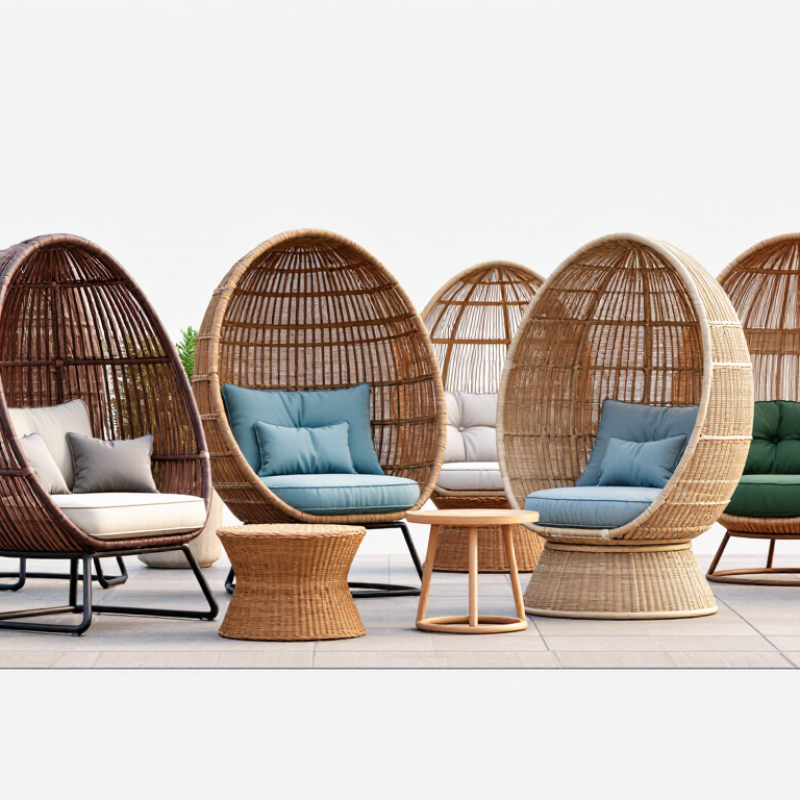
A credible comparison of the top 10 rattan egg chair manufacturers should begin with design, not appearance alone. A well-made chair balances a deep seat, supportive back, and stable hanging point. Its curved frame should feel generous without becoming difficult to move. Designers also need to consider drainage, airflow, and sunlight exposure for outdoor settings. Small details matter. Smooth edges protect clothing and skin during daily use.
Natural rattan offers warmth, flexibility, and a distinctive handwoven texture. However, it can absorb moisture and requires thoughtful placement. Synthetic rattan, often made from UV-resistant polymer, provides more consistent performance in humid or sunny environments. The frame may use powder-coated steel or treated aluminum. Aluminum resists corrosion, while steel can deliver greater rigidity. Cushion foam should recover its shape and dry quickly. Zippers, stitching, and fabric density deserve equal attention.
Manufacturing standards should cover material traceability, load testing, weld quality, coating adhesion, and packaging protection. A reliable factory checks the suspension ring, bolts, and base before shipment. Independent testing can confirm stability and chemical safety, but certificates should match the actual product. This point is often overlooked. A sample may pass inspection while later batches vary in weaving tension or coating thickness. Buyers should request production records, inspection photos, and written tolerances. My own assessment would remain cautious without repeated batch testing, because attractive showroom pieces do not always represent long-term performance.
| Rank | Manufacturer Profile | Primary Production Region | Typical Frame Construction | Common Rattan Material | Rattan Egg Chair Design Focus | Typical Load Capacity | Surface Protection | Quality and Safety Standards | Typical MOQ | Typical Production Lead Time | Best Fit for Buyers |
|---|---|---|---|---|---|---|---|---|---|---|---|
| 1 | Profile A | Southeast Asia | Powder-coated steel hanging frame with reinforced weld joints | PE synthetic rattan over steel or aluminum support tubing | Weather-resistant outdoor egg chairs with removable cushions | 120–150 kg, subject to testing configuration | UV-stabilized resin, anti-rust powder coating, water-repellent fabric | EN 581 principles; internal static-load and stability testing | 50–100 units per color or model | 35–55 days after approved sample | Outdoor hospitality, resorts, and garden furniture projects |
| 2 | Profile B | South Asia | Hand-formed natural rattan frame with hardwood reinforcement | Natural rattan cane, split cane, and woven rattan peel | Traditional handcrafted silhouettes with visible natural texture | 100–120 kg under controlled indoor use | Water-based lacquer, clear sealer, and moisture-resistant cushion covers | Moisture inspection, joint inspection, and dimensional tolerance checks | 30–80 units per design | 45–70 days, depending on hand-weaving capacity | Residential interiors, boutique hotels, and artisan collections |
| 3 | Profile C | East Asia | Aluminum tube frame with machine-welded suspension ring | Flat PE wicker or round synthetic rattan with UV additives | Contemporary profiles, neutral colors, and modular cushions | 120–150 kg with a certified hanging point | Powder coating, UV-resistant resin, quick-dry foam options | EN 581-aligned testing; supplier material and coating documentation | 100–200 units per SKU | 30–50 days after production approval | Large-volume retail and coordinated outdoor collections |
| 4 | Profile D | Indonesia | Natural rattan pole structure with hand-bound joints | Manau rattan, peeled cane, and natural woven rattan | Organic shapes, bohemian styling, and hand-finished details | 90–110 kg for indoor residential applications | Fungicide-treated rattan, clear lacquer, and controlled kiln drying | Moisture-content control, pest inspection, and workmanship grading | 20–60 units per model | 50–75 days, including drying and finishing | Eco-conscious interiors and premium handcrafted furniture |
| 5 | Profile E | Vietnam | Steel or aluminum core with woven outer shell and reinforced base | High-density PE rattan with color-masterbatch pigmentation | Stackable or knock-down designs for easier export shipping | 120–140 kg after static-load verification | UV protection, corrosion-resistant coating, and solution-dyed textiles | Packaging drop checks, load testing, and dimensional inspection | 50–150 units per configuration | 35–60 days after final specification confirmation | Importers seeking efficient container utilization |
| 6 | Profile F | China | Welded steel basket with galvanized or powder-coated suspension hardware | PE wicker, flat synthetic rattan, and rope-rattan combinations | Cost-efficient designs with broad color and cushion customization | 100–130 kg depending on basket and stand design | Powder coating, UV inhibitors, anti-corrosion primer, and outdoor fabric | Factory quality-control plan; load, weld, finish, and packaging checks | 100–300 units per SKU | 30–50 days for standard models | Mass-market furniture, e-commerce, and private-label programs |
| 7 | Profile G | Philippines | Handcrafted rattan body attached to a steel or hardwood support frame | Natural rattan cane with locally sourced woven panels | Lightweight indoor chairs with regional craft influences | 90–110 kg for standard residential use | Clear polyurethane or water-based coating for indoor environments | Visual grading, joint strength checks, and moisture inspection | 25–75 units per design | 45–65 days depending on customization | Specialty retailers and design-led interior projects |
| 8 | Profile H | Thailand | Aluminum or steel frame with precision-cut woven support panels | Outdoor-grade PE rattan with high UV and moisture resistance | Balanced ergonomic seating with integrated outdoor cushions | 110–140 kg after frame and suspension testing | Marine-grade powder coating, UV-stable resin, and quick-dry foam | EN 581-based performance checks and corrosion-resistance review | 50–120 units per finish | 40–60 days after sample sign-off | Commercial outdoor seating and upscale residential use |
| 9 | Profile I | Malaysia | Steel frame with reinforced base, suspension chain, and safety hook | Synthetic rattan engineered for humid and high-rainfall climates | Durable patio designs with replaceable cushions and components | 120–150 kg, depending on stand and anchoring method | Anti-rust powder coating, UV-stabilized weave, and mildew-resistant fabrics | Static-load, stability, weld-quality, and packaging inspections | 50–100 units per model | 35–55 days for regular production | Wet-climate markets, resorts, and contract furniture buyers |
| 10 | Profile J | Europe and Mediterranean region | Engineered aluminum or steel frame with certified hanging components | Recyclable synthetic rattan and selected natural rattan for indoor use | Minimalist designs emphasizing traceability and repairable parts | 110–130 kg according to the tested configuration | Powder coating, UV-resistant resin, and low-emission finishing systems | EN 581 reference testing, chemical compliance documentation, and traceability records | 20–50 units per configuration | 45–80 days, including documentation and approval stages | Design studios, sustainable procurement, and contract interiors |
It should combine a deep seat, supportive back, and stable hanging point. Smooth edges protect skin and clothing. The chair should feel spacious, not awkward to move.
Natural rattan feels warm and has visible handwoven texture. However, it absorbs moisture and needs sheltered placement. Synthetic rattan usually handles sunlight and humidity more consistently.
Aluminum resists corrosion and remains relatively light. Steel can provide stronger rigidity but may need better coating protection. Inspect welds carefully.
Choose foam that quickly regains its shape and dries efficiently. Check dense fabric, strong stitching, and durable zippers. A beautiful cushion can still fail early.
Request a physical sample whenever possible. Place it on a flat floor and check whether the base rocks. Inspect weaving tension, welds, drainage holes, and cushion seams.
Ask for load tests, material records, inspection photographs, and written tolerances. Check the suspension ring, bolts, base, and coating adhesion. Documents matter more than showroom pictures.
No. A certificate may cover one sample or earlier production. Later batches can show different weaving tension or coating thickness. Repeated batch checks are safer.
Score material quality, structural testing, production experience, customization, delivery, and after-sales support. Material quality deserves serious weight. Large factories are not automatically better.
Request evidence about plantation-grown rattan, recycled aluminum, and responsible packaging. Natural and synthetic materials require different recycling assessments. “Eco-friendly” alone proves very little.
Export volume may hide smaller workshops with better craftsmanship. Market reports may group rattan with wider outdoor furniture categories. My confidence would remain cautious without repeated inspections.
This guide explores the essential factors behind a high-quality Rattan Egg Chair, including ergonomic design, material selection, structural strength, weather resistance, weaving techniques, and manufacturing standards. It explains how leading manufacturers are evaluated through product quality, production capacity, craftsmanship, sustainability practices, customization services, certifications, delivery reliability, and customer support. The goal is to provide a clear framework for comparing suppliers rather than focusing only on appearance or price.
The overview also presents ten leading Rattan Egg Chair manufacturers worldwide in a neutral, brand-free format, highlighting their product ranges, design flexibility, private-label options, color and fabric choices, packaging solutions, and international market coverage. Buyers will learn how to assess a manufacturer according to project requirements, order volume, target market, budget, quality expectations, and after-sales service. By considering these factors together, retailers, hospitality businesses, designers, and private buyers can select a dependable partner and achieve a balance between comfort, durability, style, and long-term value.

 ADS Outdoor