Choosing the right Rattan Bar Stool manufacturer involves more than comparing attractive catalog photos. Material quality, construction methods, production consistency, and supplier communication all affect the final result. A stool may look elegant online, yet feel unstable after several weeks of daily use.
This guide examines leading China Rattan Bar Stool manufacturers through practical purchasing criteria. These include rattan selection, frame strength, weaving accuracy, seat comfort, finishing quality, and customization support. Experienced buyers should inspect rattan density, joint connections, and protective coatings before approving large orders. A well-made stool should sit firmly on the floor, support regular commercial use, and resist common indoor humidity changes.
Details matter.
Reliable manufacturers usually provide clear specifications, sample approval processes, factory photographs, and quality inspection records. They should also explain whether the rattan is natural or synthetic, and identify the frame material accurately. However, factory claims should not replace independent verification. Product samples can differ from mass production, especially when hand weaving is involved. That risk deserves honest attention.
The manufacturers discussed here are assessed for craftsmanship, manufacturing experience, communication, and evidence of dependable delivery. No supplier is perfect. Lead times can change, finishes may vary slightly, and customization often increases costs. Readers should request current quotations, compliance documents, packaging details, and realistic production schedules before making decisions. With careful comparison, buyers can find a capable Chinese partner and select Rattan Bar Stool products that balance appearance, comfort, durability, and commercial value.
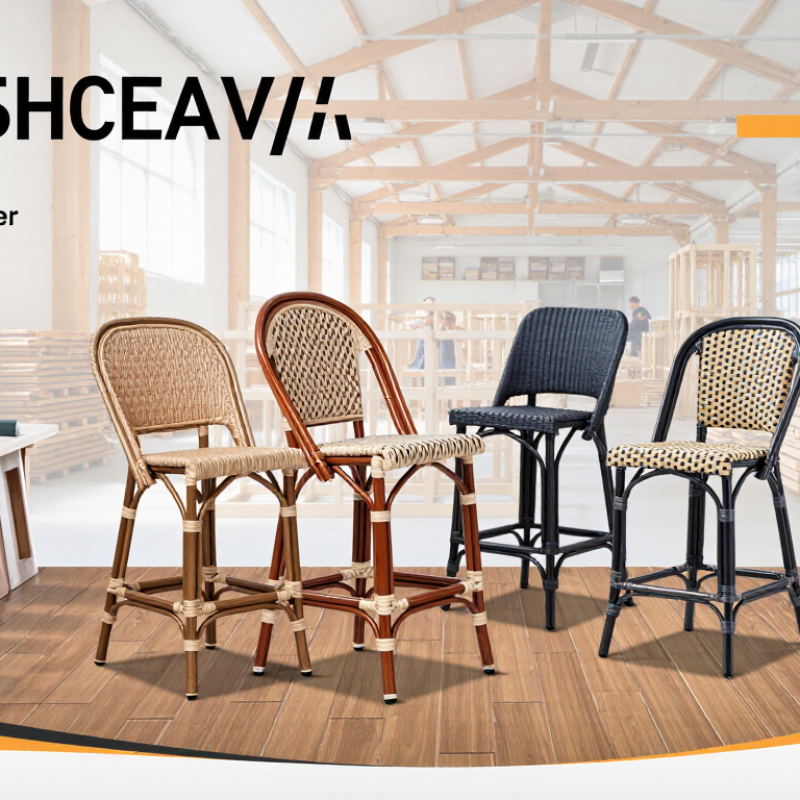
A quality China rattan bar stool manufacturer shows its expertise through material choices, not attractive photographs alone. The factory should clearly explain whether it uses natural rattan or weather-resistant synthetic rattan. Each option needs different care and performance expectations. Strong manufacturers inspect rattan thickness, color consistency, and surface strength before production. They also use stable metal or hardwood frames with accurate joints. Wobbly legs are not a minor detail.
Factory experience becomes visible in the weaving. Tight, even patterns should continue around corners and under the seat. Skilled workers leave no sharp fibers, loose ends, or uneven gaps. A dependable manufacturer also checks seat height, load capacity, balance, and finish quality during several production stages. Sample approval matters here. A sample can reveal problems that a catalog never shows.
Reliable suppliers provide clear production timelines, packaging details, inspection records, and material information. They should answer practical questions without hiding behind vague promises. Useful evidence may include workshop photographs, test reports, and traceable quality procedures. However, no factory is flawless. Even experienced teams can miss a damaged strand or slight color variation. Honest manufacturers admit these risks and explain how they correct them. Buyers should inspect samples carefully and question every unclear specification. That extra attention often separates a dependable partner from a cheap, disappointing order.
When evaluating China rattan bar stool manufacturers, start with the material rather than attractive product photos. Natural rattan feels warm and organic, but it needs controlled indoor conditions. Synthetic PE rattan handles moisture better and offers more consistent color. Ask for material specifications, UV-resistance data, and a clear statement about recycled content. Small details matter.
Inspect the frame closely. Aluminum should have clean welds and an even powder-coated surface. Steel frames need reliable rust protection, especially around joints and the footrest. Solid wood requires dry, stable timber with smooth sanding. Press the stool gently from different angles. Excessive movement may reveal weak joints. The weaving should feel tight, regular, and firmly attached without sharp ends.
Safety needs documented evidence, not promises. Request load-test results, stability testing, and inspection records for the exact model. Check seat height, footrest strength, corner finishing, and anti-tip performance. Ask whether production batches are traceable through inspection numbers. Independent laboratory reports can support confidence, but verify their scope and testing date. Supplier audits also help confirm equipment, worker training, and quality procedures.
Samples can mislead. A carefully selected sample may look better than mass production. Compare several units from one batch. Photograph hidden joints and measure dimensions yourself. No checklist is perfect. I would also test the stool on tile and uneven flooring, because real interiors rarely behave like a showroom. Clear communication and written specifications reduce avoidable surprises.
Manufacturer Evaluation Data Matrix — use the weighted criteria to compare factories without relying on company names or brand claims.
| Evaluation Area | Weight | Measurable Benchmark | Evidence to Request | Warning Signs |
|---|---|---|---|---|
| Rattan Material Quality | 15% | Use mature, evenly sized rattan with consistent color, tight weave, and no visible mold, insect damage, or excessive cracking. Natural rattan should be properly dried before assembly. | Material specification, incoming-inspection records, moisture-control procedure, close-up photographs, and a physical sample for inspection. | Uneven cane diameter, brittle fibers, strong musty odor, loose weaving, surface powder, or unexplained color variation between batches. |
| Frame Material and Corrosion Resistance | 12% | The frame should have a clearly declared material and wall thickness. Metal frames require a continuous protective finish suitable for the intended indoor or covered-outdoor environment. | Material declaration, tubing or solid-wood specifications, coating system, salt-spray or corrosion-test report when outdoor use is claimed. | No frame specification, exposed sharp metal, incomplete coating at joints, visible rust, or coating that flakes during handling. |
| Joint and Weave Craftsmanship | 14% | Joints should be tight and aligned; fasteners should be fully seated; the weave should remain secure under normal use with no sharp ends or protruding staples. | Assembly drawings, approved sample, in-process inspection checklist, photographs of joints, and defect-rate records. | Loose joints, uneven legs, visible staples, unsealed rattan ends, excessive adhesive, gaps in the weave, or inconsistent production between samples. |
| Load Capacity and Durability | 15% | The supplier should declare a user weight limit and test the complete stool, not only individual components. A practical purchasing benchmark is a declared capacity of at least 120 kg, subject to the buyer’s application. | Test report for the finished bar stool, test method, applied load, cycle count, failure criteria, and batch traceability. | Capacity is described only as “strong,” testing covers only the seat, or the supplier cannot provide results for the exact model and base. |
| Stability and Tip Resistance | 12% | The stool should remain stable during forward, sideways, and rotational loading. All four legs or the base should contact the floor consistently on a level surface. | Stability-test report referencing an applicable seating-furniture method, dimensional drawing, leg-angle specifications, and a pre-shipment inspection record. | Rocking on a level floor, narrow or poorly braced base, uneven leg lengths, excessive swivel play, or no stability documentation. |
| Ergonomics and Dimensions | 8% | Typical seat heights are approximately 600–700 mm for counter-height stools and 700–850 mm for bar-height stools. The seat-to-counter clearance should generally be about 250–300 mm. | Dimensioned technical drawing, tolerances, seat-depth and footrest measurements, prototype approval record, and packaging dimension sheet. | Seat height is not controlled, footrest position is uncomfortable, dimensions vary substantially between samples, or tolerances are absent. |
| Chemical and Surface Safety | 10% | Finishes, adhesives, dyes, and coatings should comply with the destination market’s chemical requirements. For European sales, request REACH-related declarations for applicable substances and materials. | Material safety data sheets, coating and adhesive declarations, restricted-substance test reports, and production-batch traceability. | Persistent solvent odor, undocumented coatings, different finishes from the approved sample, or test reports that do not identify the tested material. |
| Fire and Upholstery Compliance | 5% | If the stool includes upholstery, foam, or fabric, the supplier must identify the destination-market fire requirements. Compliance depends on the complete upholstery construction, not fabric alone. | Fabric and foam specifications, ignition or flammability reports where required, sewing construction details, and confirmation that the report matches the production materials. | A fabric-only certificate is presented for a finished upholstered stool, or foam, lining, and thread specifications are missing. |
| Quality-Control System | 5% | A documented process should cover incoming materials, first-piece approval, in-process checks, final inspection, carton testing, and corrective action. | Quality manual, inspection plan, acceptance criteria, defect-classification rules, corrective-action reports, and recent inspection records. | Inspection is performed only after production, records are handwritten without traceability, or there is no corrective-action process. |
| Packaging and Shipping Protection | 4% | Packaging should protect rattan from abrasion and moisture and prevent frame movement during transport. Carton dimensions and gross weight should match the approved packing list. | Packaging specification, drop or transport-test results where applicable, carton photographs, pallet plan, and moisture-protection procedure. | Rattan contacts untreated cardboard directly, insufficient corner protection, loose internal packing, or frequent transit damage. |
Choosing the right China rattan bar stool manufacturer depends on your project, not only on price. A café may need stackable stools, while a resort often prefers wider seats and weather-resistant frames. For home kitchens, comfort, compact sizing, and quiet footrests matter more. I have found that seat height is frequently overlooked. A 65-centimeter seat suits many kitchen counters, but taller commercial counters may require a different measurement.
Manufacturers with strong product development teams can adjust weave patterns, frame colors, cushions, and packaging. Ask for material samples before approving production. Natural rattan offers warmth and texture, while synthetic rattan usually handles moisture more consistently. Check the frame joints, welding quality, footrest strength, and seat balance. A stool should not wobble on a level floor. Request factory inspection records, load-testing details, and clear information about production capacity. Photos can mislead. Samples reveal more.
Tips: Match the supplier to your order size and delivery expectations. Small custom orders may suit flexible workshops, while hospitality projects need stable capacity and repeatable quality. Confirm carton protection, spare parts, and replacement policies in writing. Do not rely on attractive showroom pieces alone. I once underestimated packaging space, and shipping costs changed the whole calculation. That mistake still matters. Also, leave room for quality variation during handmade weaving, because perfect uniformity is not always realistic.
When comparing China rattan bar stool manufacturers, price should never stand alone. A low quotation may exclude cushions, export packing, testing, or tooling. Request an itemized offer. Check rattan type, frame material, finish, carton size, and replacement terms. For a fair comparison, send identical drawings and quantities to each factory. A sample tells more than a spreadsheet. Inspect the weave by hand. Look for loose strands, uneven spacing, sharp frame joints, and wobbling feet.
Customization changes both cost and factory workload. Confirm whether the workshop can adjust seat height, back shape, color, cushion fabric, and logo packaging. Ask for a pre-production sample and written approval record. Small changes can create large delays. I have seen buyers focus on color while ignoring the stool’s load-bearing structure. That is a costly blind spot. Clarify minimum order quantity, sample fees, mold charges, and custom tooling ownership. Do not accept “custom available” without photos or production evidence.
Production capacity needs measurable proof. Ask for monthly output, current order load, staffing, peak-season lead times, and inspection procedures. A factory claiming 10,000 stools monthly should explain its weaving stations, drying area, and packing lines. Request recent inspection records or a live video walkthrough. Compare promised capacity with your delivery schedule, not an impressive number. Independent pre-shipment inspection can reduce risk, but it cannot repair weak communication. My comparison sheets are useful, yet imperfect; supplier data changes, and estimates may be optimistic. Recheck key figures before signing.
Typical OEM/ODM ranges for comparing rattan bar stool suppliers by ex-factory price, customization capability, minimum order quantity, lead time, and monthly production capacity.
Larger factories generally provide higher production capacity and more stable lead times, while smaller suppliers may offer lower minimum order quantities and more flexible customization. Actual prices vary according to frame material, weaving pattern, cushion specifications, finish, order volume, packaging, and shipping terms.
Before placing an order with a China rattan bar stool manufacturer, inspect the materials, structure, and production controls. Ask whether the rattan is natural or synthetic, and request clear specifications. Natural rattan can vary in color and diameter. Synthetic rattan should resist cracking, fading, and moisture. Check the frame material, weld points, leg levelness, and seat attachment. A polished catalog can still hide weak joints.
Request a physical sample before approving bulk production. Measure its seat height, width, footrest position, and total weight. Confirm these details against your target counter height. Test the stool on a hard floor and apply gradual pressure to the seat. It should remain stable without unusual movement. Ask for load-testing records, coating information, and inspection procedures. Factory photos help, but live video checks or an independent inspection provide stronger evidence.
Review the order contract carefully. It should define materials, dimensions, color tolerance, packaging, delivery dates, spare parts, and remedies for defects. Ask how stools are protected from crushed rattan during shipping. Sample packaging may look safe, yet full-container handling can be rough. Request production updates with dated photos. Verify the manufacturer’s export experience and quality documents, but do not treat certificates as proof of every claim. A small trial order reduces risk, although it may increase the unit cost. That trade-off deserves honest calculation.
The supplier should state whether the stool uses natural rattan or synthetic PE rattan. Natural rattan feels warm and organic. It needs controlled indoor conditions. Synthetic rattan handles moisture better and usually keeps color more consistently. Ask for UV-resistance data and recycled-content information.
Check aluminum welds, powder coating, wood sanding, and steel rust protection. Press the stool gently from several angles. Excessive movement may indicate weak joints. Inspect the footrest closely. Wobbly legs are a warning sign.
The weave should remain tight and even around corners and beneath the seat. Look for loose strands, sharp fibers, uneven gaps, and damaged edges. Run your fingers across the surface carefully. A small defect can become larger later.
Ask for load-test results, stability testing, and inspection records for the exact model. Check seat height, footrest strength, corner finishing, and anti-tip performance. Batch traceability adds useful evidence. Independent reports help, but verify their testing date and scope.
A sample can reveal weak joints, poor weaving, incorrect dimensions, or uneven color. Compare several stools from one production batch when possible. Measure them yourself. Photograph hidden joints and the underside. One sample may look unusually perfect.
Request itemized quotations with identical drawings and quantities. Check whether cushions, export packing, testing, tooling, and replacement terms are included. Compare frame materials, rattan type, carton size, and finish. The cheapest offer may omit important costs.
Confirm seat height, back shape, rattan color, cushion fabric, and packaging requirements. Ask for a pre-production sample and approval record. Clarify minimum order quantities, sample fees, mold charges, and tooling ownership. “Customization available” is not enough evidence.
Ask about monthly output, current orders, staffing, peak-season lead times, and inspection procedures. A supplier claiming high capacity should explain its weaving stations and packing lines. Request recent records or a live workshop walkthrough. Numbers can be optimistic. Recheck them before signing.
Choosing the best China Rattan Bar Stool manufacturer requires more than comparing attractive designs and low prices. A reliable supplier should demonstrate consistent material quality, skilled craftsmanship, stable production capabilities, and a clear commitment to product safety. Buyers should examine the rattan’s durability, frame construction, finishing details, weight capacity, and quality-control procedures. It is also important to confirm whether the manufacturer can provide samples, technical specifications, inspection records, and packaging suited to the destination market.
Different manufacturers may serve different needs, from standard commercial seating to customized designs for hospitality, retail, or residential projects. When comparing suppliers, evaluate pricing alongside minimum order quantities, customization options, lead times, production capacity, and communication efficiency. Before placing an order, carefully review samples, dimensions, colors, materials, warranties, payment terms, delivery schedules, and inspection arrangements. A thorough evaluation helps buyers select a dependable partner that can deliver durable, safe, and visually consistent Rattan Bar Stool products.

ADS Outdoor